

- Produced with eco‑friendly materials like kraft and recyclable cardboard
- Enhanced through custom finishes such as foil stamping, embossing, or spot UV
- Optimized for e‑commerce shipping as well as retail display
 In short, the tuck box has grown from a basic folding carton into a versatile, customizable, and sustainable packaging style, used by industries ranging from cosmetics to food delivery.
- Easy Opening & Closing
- Space Efficiency
- Durability & Product Protection
- Eco‑Friendly & Reusable Design
 In short, the functionality of custom tuck boxes lies in their ability to combine convenience, efficiency, protection, and sustainability in one stylish packaging format.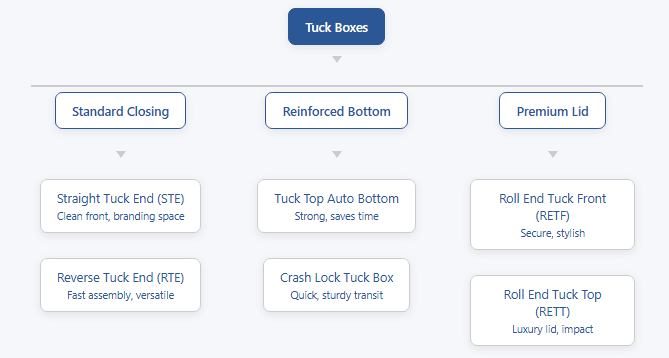
- Paperboard / Cardboard
- Overview: Lightweight yet sturdy, paperboard (also called cardboard) remains the most common material for tuck boxes. It’s easy to cut, fold, and print, making it ideal for high‑volume packaging.
- Best for: Cosmetics, small electronics, stationery, and retail display.
- Reference: Learn more about paperboard in Wikipedia’s folding carton article.
- Kraft Paper
- Overview: Crafted from unbleached pulp, kraft stock is eco‑friendly, recyclable, and biodegradable. Its natural brown look conveys organic quality and sustainability.
- Best for: Food, bakery, skincare, and eco‑centric brands.
- Pro Example: Businesses often choose custom kraft boxes to highlight their green values while still ensuring strong protection.
- Corrugated Board
- Overview: Made with a fluted layer sandwiched between liners, corrugated stock provides maximum durability. Although bulkier than paperboard, it resists impact during shipping.
- Best for: E‑commerce mailers, heavy items, or delicate electronics that require safe delivery.
- Pro Example: Companies often upgrade to custom corrugated mailer boxes when standard paperboard tuck boxes aren’t enough.
Takeaway: Whether you want lightweight cardboard, eco‑friendly kraft, or sturdy corrugated, each material supports unique business goals. That flexibility is what makes tuck boxes a universal favorite across industries.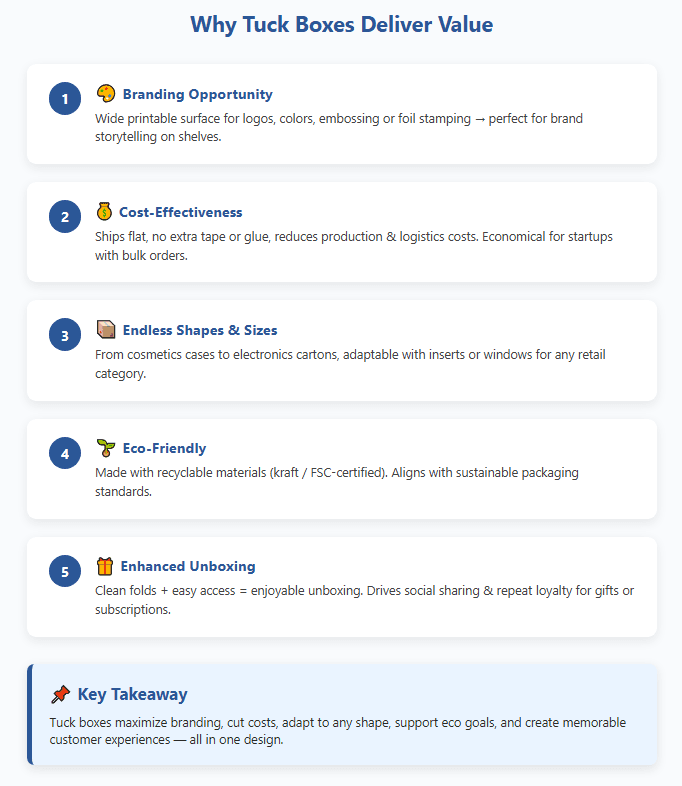
- Branding Opportunity
- The wide printable surface of a tuck box makes it a natural canvas for creative branding. From vibrant colors to minimalist logos, everything can be showcased. Many businesses enhance brand storytelling with custom printed boxes, embossing, or foil stamping, ensuring their products stand out on competitive shelves.
- Cost‑Effectiveness
- Tuck boxes are easy to manufacture, ship flat to save storage, and require no extra glue or tape to assemble. These features reduce production and logistics costs. Bulk orders of tuck end boxes are especially economical for startups and growing e‑commerce brands.
- Endless Shapes & Sizes
- From small cases for cosmetics to larger cartons for electronics, tuck boxes can be cut and folded into virtually any size. Inserts or die‑cut windows can also be added to improve product visibility. This adaptability makes them suitable for cosmetic packaging, food, retail, or gifts.
- Eco‑Friendly Option
- Most tuck boxes are made from recyclable materials such as kraft stock or FSC‑certified cardboard. Choosing sustainable solutions helps brands appeal to eco‑conscious consumers while aligning with global sustainable packaging standards.
- Enhanced Unboxing Experience
- Unboxing has become part of the customer journey—often shared on social media. The clean fold and easy access of custom tuck packaging provide a natural, enjoyable opening experience. For gift sets or subscription boxes, this can be the difference between a one‑time purchase and repeat loyalty.
In summary: Tuck boxes maximize branding, cut costs, adapt to any shape, support eco goals, and create memorable customer experiences—all in one practical design.- Retail & Shelf Display
- In retail environments, first impressions decide whether a product is picked up or passed by. Tuck boxes offer clean lines and full‑coverage printing space, making them ideal for custom retail packaging. Brands can print product details, barcodes, and eye‑catching designs to influence in‑store purchase decisions.
- Food & Bakery Packaging
- From cookies to chocolates, food must be packed securely yet attractively. Tuck boxes made from kraft paperboard ensure food safety while presenting products in a hygienic, eco‑friendly way. Die‑cut windows can even display treats inside, commonly used for bakery boxes.
- Cosmetics & Personal Care
- Lightweight yet durable, tuck boxes are well suited for makeup, skincare, perfumes, and haircare items. With custom printing, embossing, or metallic finishes, a custom cosmetic box instantly boosts shelf appeal and reinforces a sense of luxury.
- Pharmaceuticals & Healthcare
- Medicines, supplements, and medical devices require compact, secure packaging. Straight or reverse tuck end boxes keep items organized and tamper‑resistant. Many pharmaceutical brands also rely on printed tuck cartons to comply with labeling and packaging & labeling regulations.
- Toys & Collectibles
- Children’s toys, trading cards, or collectible items often come in tuck packaging because it is stackable, protective, and cost‑efficient. For example, game cards are traditionally packed in straight tuck boxes, combining convenience with an exciting unboxing moment.
Bottom line: No matter the sector—be it fashion, food, healthcare, or toys—custom tuck boxes adapt seamlessly, keeping products safe while amplifying brand presentation.
- High Customization Possibilities
- Full‑color printing for logos, product images, or vibrant artwork
- Special finishes like foil stamping, spot UV, embossing, or debossing
- Matte, glossy, or soft‑touch lamination to control the feel and aesthetics
- Structural Enhancements
- Inserts: Foam or cardboard inserts secure products like glass bottles or tech gadgets inside the box.
- Die‑cut windows: Let consumers view the product directly, commonly used in soap boxes or bakery packaging.
- Premium lamination: Adds both durability and tactile quality, making the package feel high‑end.
- Aligning Branding with Customer Experience
In short, custom tuck packaging ensures that the first thing customers notice about your product isn’t only what’s inside—but the story your brand tells from the outside.- Eco Focus
Sustainability is no longer optional—it’s an expectation. Many companies are shifting toward kraft tuck boxes made from recyclable and biodegradable paper stock. Even laminations and inks are being reformulated to reduce environmental impact. This aligns with global efforts around sustainable packaging, appealing to both regulators and eco‑minded consumers.
- Smart Packaging with QR or AR Features
Interactive packaging is becoming the next frontier. By printing QR codes or integrating AR elements, tuck boxes can connect packaging to the digital world. Customers can scan a code to:
- Verify authenticity
- Access tutorials or usage guides
- Unlock loyalty rewards
- This trend is especially relevant to custom cosmetic packaging and premium retail items where consumer engagement is crucial.
- Small‑Batch, On‑Demand Production
With the growth of niche e‑commerce brands and seasonal launches, businesses increasingly need short‑run, digitally printed tuck boxes. On‑demand production eliminates the expense of large inventories and allows for quick design iterations. Whether it’s a limited holiday edition or influencer collaboration, this flexibility gives small and large brands alike the ability to test and scale effectively.
Takeaway: The future of tuck boxes lies in eco‑smart materials, digital integration, and agile production models. Brands that adopt these innovations will reduce costs while staying relevant to modern consumer expectations.
- Strengthen their visual identity with unique printing and finishes
- Reduce costs through efficient flat shipping and eco‑friendly designs
- Enhance the customer experience with memorable unboxing moments
Next step for your business:- Explore our full product catalog for inspiration
- Or contact our team to create a tailored tuck box design that fits your product, your budget, and your brand voice
1. What are tuck boxes made of?
2. Are tuck boxes eco‑friendly?
3. What is the difference between straight tuck and reverse tuck?
4. Are tuck boxes good for shipping?
5. What products are best packaged in tuck boxes?
- Cosmetics & skincare (lipsticks, creams, perfumes)
- Food & bakery goods (cakes, chocolates, snacks)
- Retail items (electronics, candles, stationery)
- Healthcare & pharmaceuticals (supplements, devices)
- Toys & collectibles (trading cards, small games)
In short, tuck packaging adapts to nearly any industry, offering both functional protection and strong branding opportunities.
With more than 10 years of experience in OEM/ODM/Private Label Paper Packaging, I'd love to share with you the valuable knowledge related to paper box products from a reliable Chinese supplier's perspective.