
Shoulder Neck Box Cost Guide: Cost Breakdown and Saving tips
Shoulder neck rigid boxes have become a go-to option for high-end luxury packaging thanks to their sophisticated three-piece design and refined, layered appearance. This unique structure delivers both strong protection and an impressive unboxing experience. That said, pricing can vary widely depending on the choice of materials, structural complexity, surface finishes, and order volume.
This guide is designed for B2B buyers, brand owners, and wholesalers who want a clearer understanding of current pricing. It breaks down the costs, explains what really drives them, and shares practical ways to reduce expenses without sacrificing that premium unboxing experience.
Shoulder Neck Box Cost Overview
The pricing of a shoulder neck rigid box depends on multiple factors, though the following ranges serve as a reliable reference.
The average price range for bulk orders is as follows:
- Basic designs (800gsm greyboard + art paper wrap + simple printing, basic paper insert): $1.20 – $2.50 per unit
- Mid-range custom designs (1200–1500gsm greyboard + specialty paper or PU leather wrap + foil stamping + EVA foam insert): $2.80 – $6.50 per unit
- Premium luxury designs (high-thickness greyboard + velvet/PU leather wrap + multi-process finishing (foil + embossing + spot UV) + custom velvet insert): $6.50 – $14+ per unit

These prices are based on standard order quantities, typically 1,000 to 5,000 pieces.
Smaller runs come with significantly higher per-unit costs because of setup fees and reduced efficiency. Furthermore, special designs using premium materials or complex processes can significantly increase the final cost.
Key Factors That Affect Shoulder Neck Box Cost
The total cost of a shoulder neck rigid box comes down to a handful of things. When you know what really affects the price, you can make better choices, keep your spending in check, and still end up with a premium-looking box.
Material Selection
Materials are a big part of the price.
The main components include:
- Greyboard (usually between 800gsm and 2000gsm)
- External wrapping papers that include art paper, kraft paper or special paper.
- High quality surface finishes like PU leather, velvet, or textured finishes.
Better materials will definitely improve how the box looks and feels, but they also cost more. For example, switching from standard art paper to PU leather or velvet can push material costs up by 30–60% or even higher, depending on the quality and thickness.
Size and Structural Complexity
Bigger boxes simply use more materials, and that not only increases production costs but also adds to shipping. It’s usually smarter to size the box pretty close to your actual product dimensions.
Structural complexity is also a factor. For example, designs with double-layered shoulders
or special functions require highly skilled craftsmen and longer production times.
Printing and Surface Finishing
Surface finishing increases aesthetics of the packaging and also brand identity.
Finishing common methods are:
- Gold foil stamping or silver foil stamping or any other color.
- Embossing and debossing
- UV coating
- Matte or glossy lamination
Each surface finishing process adds higher costs and longer processing time. A single process may suffice for many designs, but luxury packaging often combines multiple processes, which can increase costs by more than 15%
Inserts and Components
Products require internal inserts as a way of positioning and display.
Typical insert types are:
- EVA foam inserts
- Velvet-lined inserts
- Satin fabric
- Molded plastic trays
Other options like LED lights, ribbon pull tabs or custom shaped compartments will increase the total cost.
Order Quantity
Unit price is directly related to the order quantity.
Smaller quantities mean higher per-unit costs due to fixed setup expenses, while larger orders benefit from economies of scale. The cost per unit can be considerably lowered by increasing the volume of the orders.
For example, a 500 units order can be quoted at a significantly higher unit price than a 5,000 units order of the same design.
Labor and Assembly
The multi-part structure of shoulder boxes requires precise assembly, and the additional gluing and surface finishes afterward will increase labor costs.
Detailed Cost Breakdown
The cost of a shoulder neck box can be divided into the following parts:
- Materials: 40% to 50%
- Labor: 20% to 30%
- Printing and finishing: 15% to 25%
- Packaging and logistics: 5% to 10%
The cost of labor and finishing procedures also significant portion of the total cost, especially in high end designs.

How to Reduce Shoulder Neck Rigid Box Costs
Reducing costs while maintaining a good appearance can be achieved through a variety of effective methods.
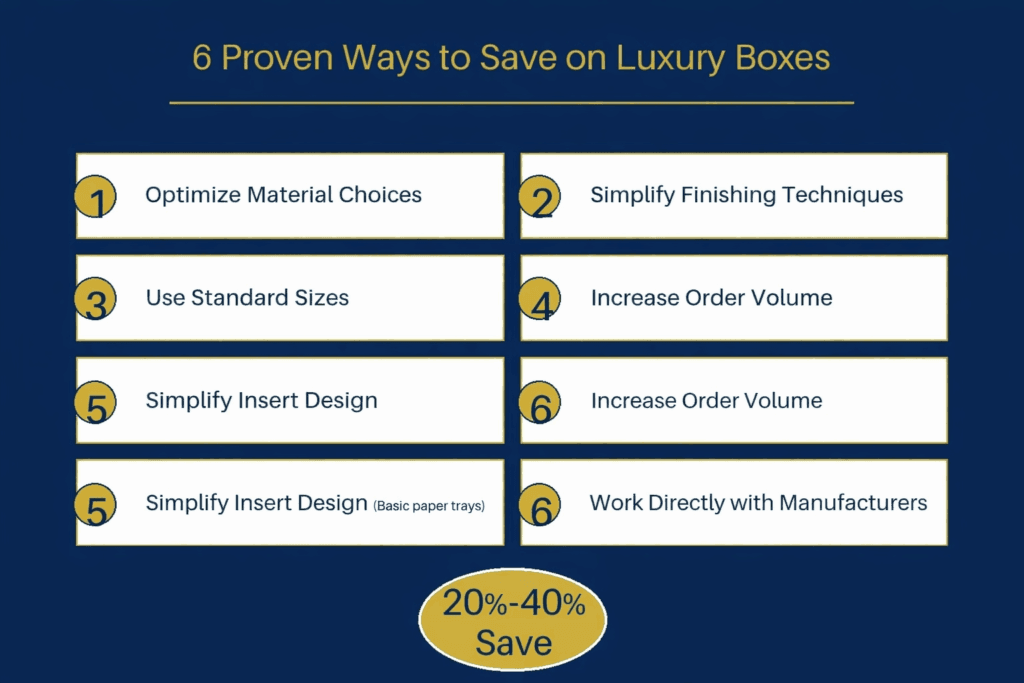
Optimize Material Choices
Significant cost savings of 25% to 45% can be achieved by choosing materials that are cost-effective and do not compromise structural integrity. In most application scenarios, simply using popular wrapping paper and standard greyboard that is readily available on the market will suffice.
Simplify Finishing Techniques
Reducing the number of subsequent processing steps can reduce production costs by 15% – 30%. A well-designed logo paired with just one or two premium finishing techniques can often deliver a luxurious look. In many cases, less is more — allowing the brand to stand out more effectively.
Use Standard Sizes
Customizing the size requires new cutting die mold, but choosing the regular size can save money.
Increase Order Volume
Increasing the order quantity can spread fixed costs such as startup fees evenly, and suppliers are also willing to give certain discounts for bulk orders. These two points can minimize the unit cost. For example, moving from 500 to 5,000 units typically reduces per-unit cost by 30–55%
Simplify Insert Design
For the inserts, many customers prefer to start with basic paper trays first. They only upgrade to EVA foam or sponge when they need better protection or a more luxurious feel.
Direct Work with the Manufacturers
Purchasing directly from manufacturers reduces intermediary costs and improves communication efficiency. Different manufacturers offer different prices and quality. Many buyers start by placing small trial orders with several manufacturers to evaluate quality, communication, and reliability, then narrow their focus to long-term partnerships with just two or three trusted suppliers.
Why Work With a Direct Manufacturer.
The packaging industry is intensely competitive, where pricing, quality, and lead times often determine who wins the business. A brand represents the culmination of long-term reputation and the passage of time; compromising the customer experience due to packaging issues is, therefore, a highly counterproductive and costly mistake.
Working with an experienced manufacturer long-term usually pays off. Your orders get more attention, pricing tends to be better, lead times are shorter, and the quality stays consistent. It also helps reduce risks and makes your overall margins more stable.
Experienced manufacturers make a real difference with consistent quality and competitive pricing. Companies with strong production expertise, like Meiyin, are well-positioned to build long-term partnerships based on good communication, smart design optimization, and reliable lead times.
Conclusion
Materials, structure, finishing, inserts, and order volume all have a direct impact on cost. Having a clear understanding of these factors helps with better planning and budget control. At the same time, with so many suppliers to choose from, working with someone experienced and dependable can save you a lot of trouble in the long run.
FAQ
What is the typical minimum order quantity (MOQ) for shoulder neck boxes?
Most manufacturers have an MOQ of 500 to 1,000 units. But some are more flexible and can go down to 100 to 300. For example, companies like MEIYIN are usually open to smaller orders.
Why are shoulder neck boxes more expensive than other boxes?
Shoulder neck rigid boxes are usually more expensive than standard rigid boxes. The main reason is the structure, an inner neck, so it uses more material and takes more work to assemble. Furthermore, these boxes are often used for premium products, so better finishes also lead the cost up.
What factors affect shoulder neck box pricing the most?
Pricing mostly comes down to materials, size, finishing, inserts, and volume.
What is the average cost of a shoulder neck box?
Shoulder neck boxes typically cost between $1.20 and $10 or more per unit. It mostly depends on the materials, size, finishes, and quantity. If you upgrade the finishes or inserts, the price can easily go over $5 each.
How can I reduce the cost of a shoulder neck box?
Some cost-saving tips: No complex finishing processes, use standard materials, keep insert designs simple, increase order quantities.

With more than 10 years of experience in OEM/ODM/Private Label Paper Packaging, I'd love to share with you the valuable knowledge related to paper box products from a reliable Chinese supplier's perspective.
Table of Contents
Own your OEM/ODM/Private label of paper packaging is so easy here.