
Horizontal Paper Bags
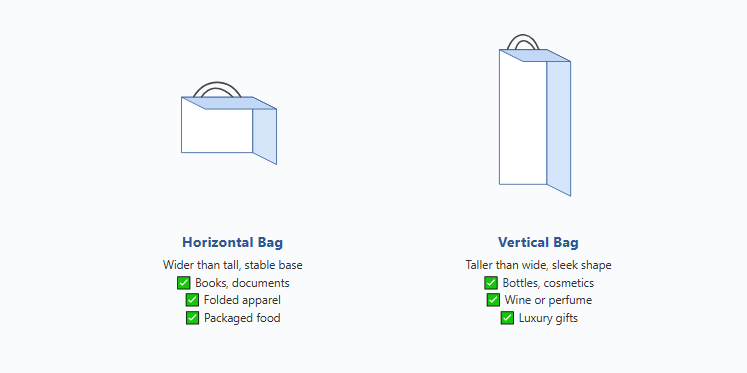
- Definition: Wider than they are tall, with a broader base.
- Key benefits: Provide a stable bottom for stacking, prevent items from tipping, and offer generous cross‑wise space.
- Best use cases: Books, documents, folded apparel, or packaged food. These items sit more securely when laid horizontally, minimizing shifting during handling.
Vertical Paper Bags
- Definition: Taller than they are wide, with a slim, upright profile.
- Key benefits: A sleek silhouette that looks modern, easy to carry, and efficient for retail displays.
- Best use cases: Bottles, cosmetics, wine, perfumes, or luxury gifts that should be presented standing upright. The orientation adds elegance while matching the product’s natural shape.
 According to Wikipedia’s entry on paper bags, different formats are developed not only for structural strength but also for how they influence consumer perception and brand appeal.
In short: Horizontal paper bags are all about stability and ease of storage, while vertical paper bags are perfect for presentation and upscale branding. Choosing the right orientation ensures your packaging is both functional and attractive.
Selecting the right paper bag size is not as simple as picking something “that fits.” Bag dimensions affect protection, usability, branding, and even your packaging costs. Here are the most important factors to weigh before placing an order.
- Product Size & Shape
The most obvious factor is the product itself.
- Flat or wide items (books, clothing, bakery boxes) are better suited to horizontal bags with a stable base.
- Tall or cylindrical items (wine bottles, skincare bottles, rolled garments) look better in vertical bags.
A snug fit prevents products from shifting while also improving presentation. For eco‑conscious items, many brands choose custom kraft bags that match product proportions and sustainability goals.
- Quantity of Products
Will your bag carry a single item (like one perfume bottle) or multiple products bundled together (like a skincare set)? Bulkier assortments require extra width and gusset depth to avoid overstuffing. Always allow enough space for tissue paper or protective padding.
- Budget Considerations
The choice between custom-made sizes and standard stock sizes has a direct impact on budget:
- Custom sizes deliver a perfect fit and premium look, but often require higher minimum order quantities (MOQs) and additional setup costs.
- Standard stock bags are more cost‑effective, with no tooling fees and faster turnaround—ideal for small businesses and events.
For example, a boutique might choose luxury paper bags in custom dimensions for high-value products, while using standard sizes for everyday sales.
- Branding & Presentation Needs
Paper bags double as walking advertisements. Consider:
- Logo and artwork placement: More visible on wider surfaces.
- Handle comfort: Wider bags distribute weight more evenly, making them easier to carry.
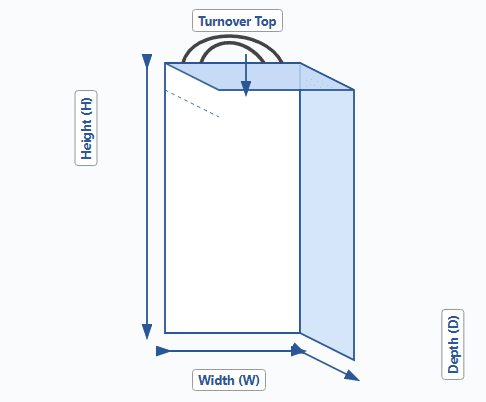
- Premium design features: Turnover tops or gift bags with ribbon handles enhance elegance and customer perception.
Takeaway: A well-chosen bag size protects your products, fits your budget, and carries your brand identity forward.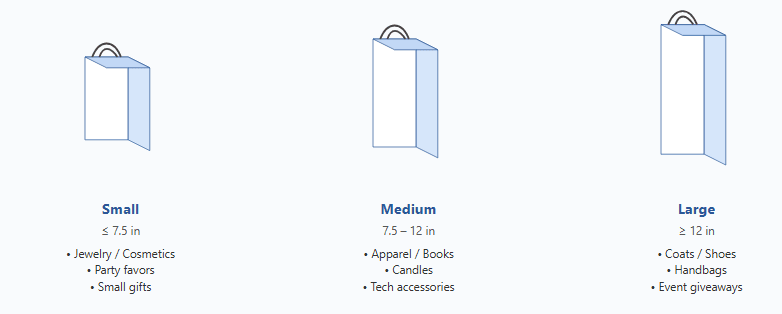
Small Paper Bags (≤ 7.5 in)
Best for: Jewelry, cosmetics, party favors, and small gifts.
- Perfect for accessories like necklaces, lipsticks, or travel-size skincare.
- Compact yet brandable—ideal for events or boutiques handing out samples.
- Works especially well as luxury paper bags for premium yet petite items.
Medium Paper Bags (7.5 – 12 in)
Best for: Apparel, books, candles, or tech accessories.
- A versatile mid‑range bag, commonly found in fashion boutiques and bookstores.
- Suitable for folded T‑shirts, boxed skincare sets, or journals.
- Many retailers prefer euro tote shopping bags in this size range for a polished, upscale look.
Large Paper Bags (≥ 12 in)
Best for: Coats, shoes, handbags, event giveaways.
- Spacious enough to hold bigger retail items or multiple products together.
- Often used at events as “swag bags” or in high‑end retail stores for luxury clothing.
- Their larger surface area provides the perfect canvas for bold branding or striking artwork.
Note: Even with ready‑made sizes, businesses can still customize surface design, handle style, and finishes—balancing affordability with visual impact.When planning your packaging strategy, brands often face a key choice: custom-sized paper bags or standard stock sizes. Each option carries unique benefits depending on your product type, order volume, and branding goals.
Custom Paper Bags
- Tailored fit: Designed exactly to your product’s dimensions, eliminating wasted space and improving product protection.
- Premium look: Allows for advanced features such as foil stamping, embossing, or unique handle styles.
- Higher MOQs: Most manufacturers require a minimum order quantity for custom bag production, making it better suited for larger or ongoing orders.
- Best for brands seeking high-impact presentation, such as luxury boutiques, cosmetics brands, or corporate gifts.
Standard Paper Bags
- Economical: Produced in common dimensions, avoiding the extra cost of custom die-cuts or setup fees.
- Faster production: Stock sizes are ready-made and quicker to deliver, ideal when deadlines are tight.
- Accessible for small businesses: Perfect for retailers, events, or startups that need professional packaging without high investment.
Quick tip: Many successful brands use a mix—custom sizes for high-value flagship products, and standard sizes for daily operations. This balances budget and presentation without compromising brand perception.Because of their adaptability, paper bags are used across nearly every industry. The right size not only ensures functionality but also enhances customer perception of your brand.
Retail & Fashion Boutiques
Clothing stores and accessory shops often use medium to large paper bags for T‑shirts, scarves, or handbags. Small bags are perfect for jewelry and wallets. Many retailers upgrade to luxury paper bags to deliver a premium shopping experience that doubles as brand advertising.
Gifts & Events
For weddings, corporate gatherings, or trade shows, paper bags are popular as gift or giveaway packaging. Small sizes handle favors like candles or cosmetics, while large, sturdy formats work well as event “swag bags.” Custom branding on gift bags with ribbon handles elevates presentation even further.
Food & Beverage
Paper bags remain a trusted solution in the food packaging industry.
- Bakery bags for bread, pastries, or cookies often come in small to medium sizes.
- Wine or bottle bags are typically vertical, ensuring safe handling and elegant presentation.
- Takeout carry bags are designed in medium to large standard sizes, often made from kraft for durability.
Luxury Products
Premium brands use customized sizes as part of their corporate branding strategy. Large satin‑finished bags with foil stamping are common for luxury apparel, while compact glossy bags are ideal for perfumes and watches. Businesses often choose euro tote shopping bags in made‑to‑fit dimensions to reflect exclusivity.
In short: Whether it’s daily retail, food delivery, or upscale gifting, the versatility of paper bag sizes ensures a perfect match for every industry.In packaging, sustainability is no longer a bonus—it’s an expectation. Selecting the right paper bag size plays a direct role in reducing environmental impact.
Right Sizing Reduces Material Waste
Oversized bags require more paper than necessary and often call for extra fillers to keep products secure. Choosing a precisely sized bag ensures efficient material use, helping businesses cut costs while minimizing waste.
Eco‑Friendly Kraft & Recycled Options
Many retailers now choose kraft paper bags or bags made from recycled materials. Besides their strength, these bags give a natural, eco‑conscious appearance that resonates with today’s consumers. A correctly sized kraft bag not only looks professional but also supports your brand’s green message.
Appealing to Green Consumers
Shoppers are increasingly making purchasing decisions based on sustainability values. A bag that is both dimensionally efficient and made from eco‑friendly stock strengthens your reputation as a responsible brand.
According to sustainable packaging research, optimized material use and eco‑friendly substrates are among the leading strategies for reducing packaging’s environmental footprint.In short: The right paper bag size is not just about functionality—it’s an opportunity to combine branding, efficiency, and sustainability in one simple choice.
The right paper bag size does more than hold your product—it protects it, enhances presentation, optimizes costs, and reflects your brand values. Small bags highlight jewelry or cosmetics with charm, medium sizes support everyday retail like apparel or books, and large formats showcase luxury purchases or event giveaways.
By paying attention to proper dimensions, you reduce material waste, control expenses, and deliver a polished unboxing or carry‑out experience that customers remember.
Next step for your brand:- Browse our full paper bag collection to explore standard and custom options
- Or contact our team today for a tailored quote that matches your products and your branding goals
With the right bag size, you’re not just packaging products—you’re presenting your brand with precision and style.

Hi, I'm WiWi Deng, hope you like this blog post
With more than 10 years of experience in OEM/ODM/Private Label Paper Packaging, I'd love to share with you the valuable knowledge related to paper box products from a reliable Chinese supplier's perspective.