
Introduction
Two boxes. Same board, same print, same price — except one carries a gold logo that catches the light, and the other has a raised pattern you feel before you see.
Foil stamping and embossing are the two finishes buyers ask for most when they want a box to feel expensive. They work in completely different ways, cost different amounts, and sell in different contexts. Choosing wrong wastes money; choosing right can lift perceived value more than any print upgrade.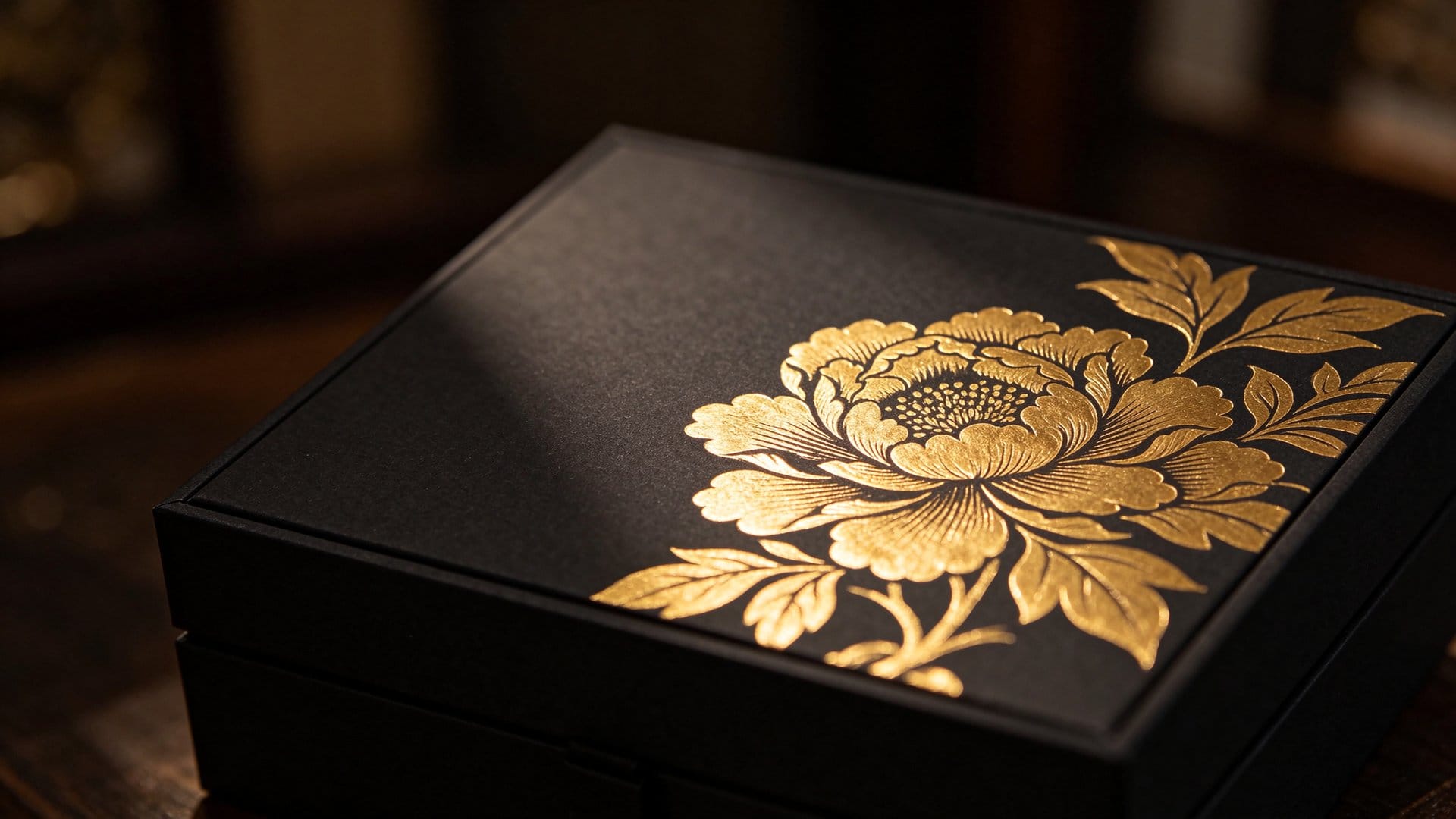
Foil stamping: metallic foil transferred under heat and pressure.
What Foil Stamping Actually Does
Foil stamping (hot foil stamping) presses a thin metallic foil onto the board with a heated die. The foil bonds to the surface and leaves a reflective gold, silver, copper, or holographic mark.
What buyers notice: shine and contrast. On dark or matte surfaces, foil stamping reads instantly as premium — it’s the finish behind most luxury cosmetics, wine, and jewelry boxes.
What it costs: a one-time die (roughly $80–200 for a small logo, more for large or complex art) plus a small per-unit increment at volume. Short runs carry a higher unit cost because the die and setup are amortized over fewer boxes.
What Embossing Actually Does
Embossing raises the surface using a matched die pair — one pushes from below, one shapes from above. Blind embossing leaves no color at all: just a raised form and its shadow.
What buyers notice: tactility. Embossing works best on uncoated or textured stock, where side light creates shadow and depth. On a gloss-laminated surface it nearly disappears.
What it costs: similar die investment to foil, usually a slightly lower per-unit increment since no foil is consumed.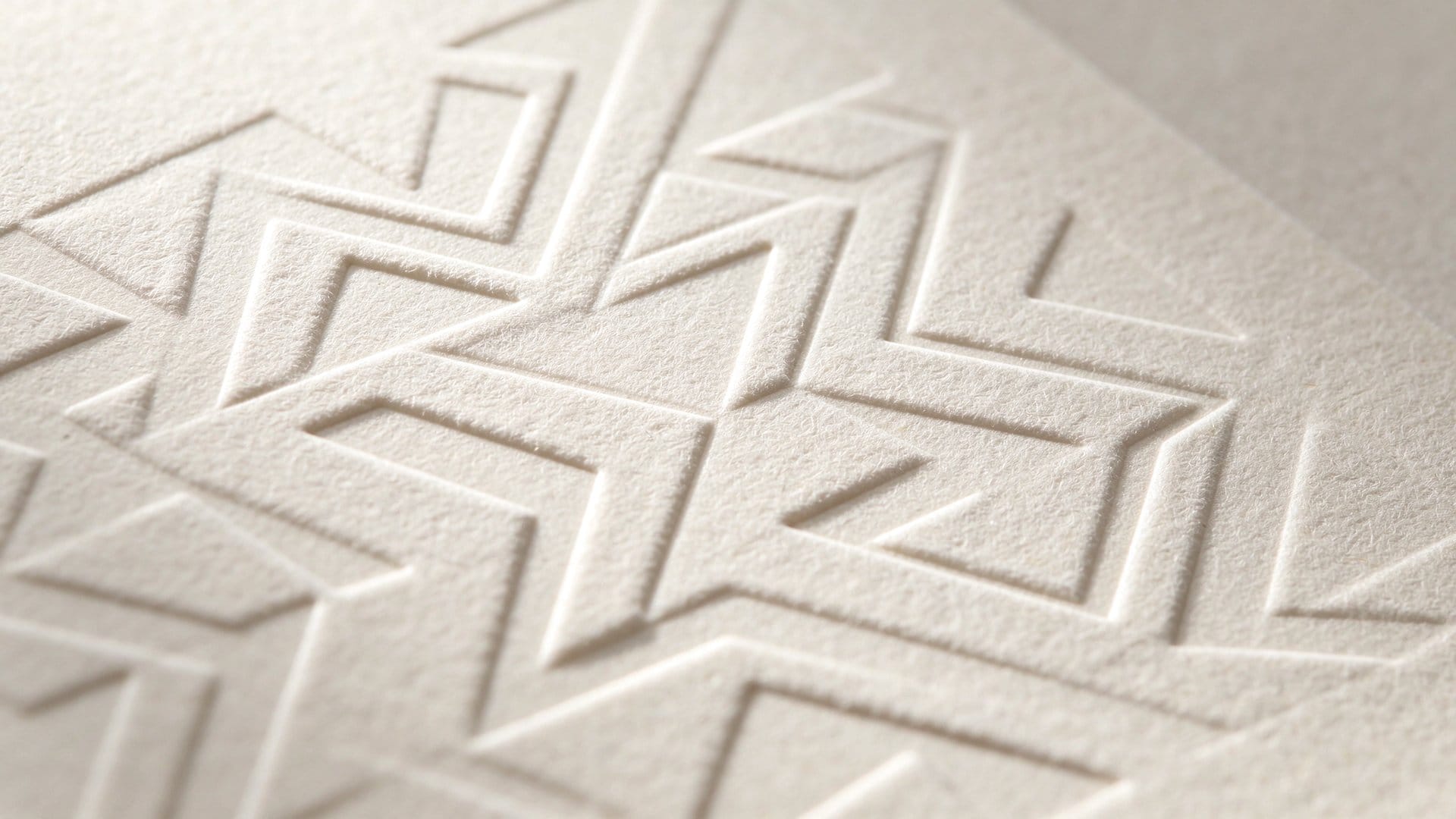
Blind embossing: no ink, no foil — just depth and shadow.
Side-by-Side Comparison
Which One Sells More?
The honest answer depends on where the box sells.
On a shelf or in a shopping bag: foil stamping wins. Shoppers scan, they don’t touch. A metallic mark is readable from two meters; embossing is invisible until someone picks the box up.
In hand and in unboxing: embossing wins. Tactile finishes create the “this feels expensive” moment that drives user-generated unboxing content.
In product photography: foil stamping wins again — it catches light in stills and video. Embossing needs deliberate raking light, which most e-commerce setups don’t have.
For sustainability-led brands: embossing is the cleaner story. No foil means no mixed-material concern, and it pairs naturally with FSC-certified uncoated board.
If you can only afford one, choose foil stamping for retail and gifting; choose embossing for direct-to-consumer unboxing and premium stationery.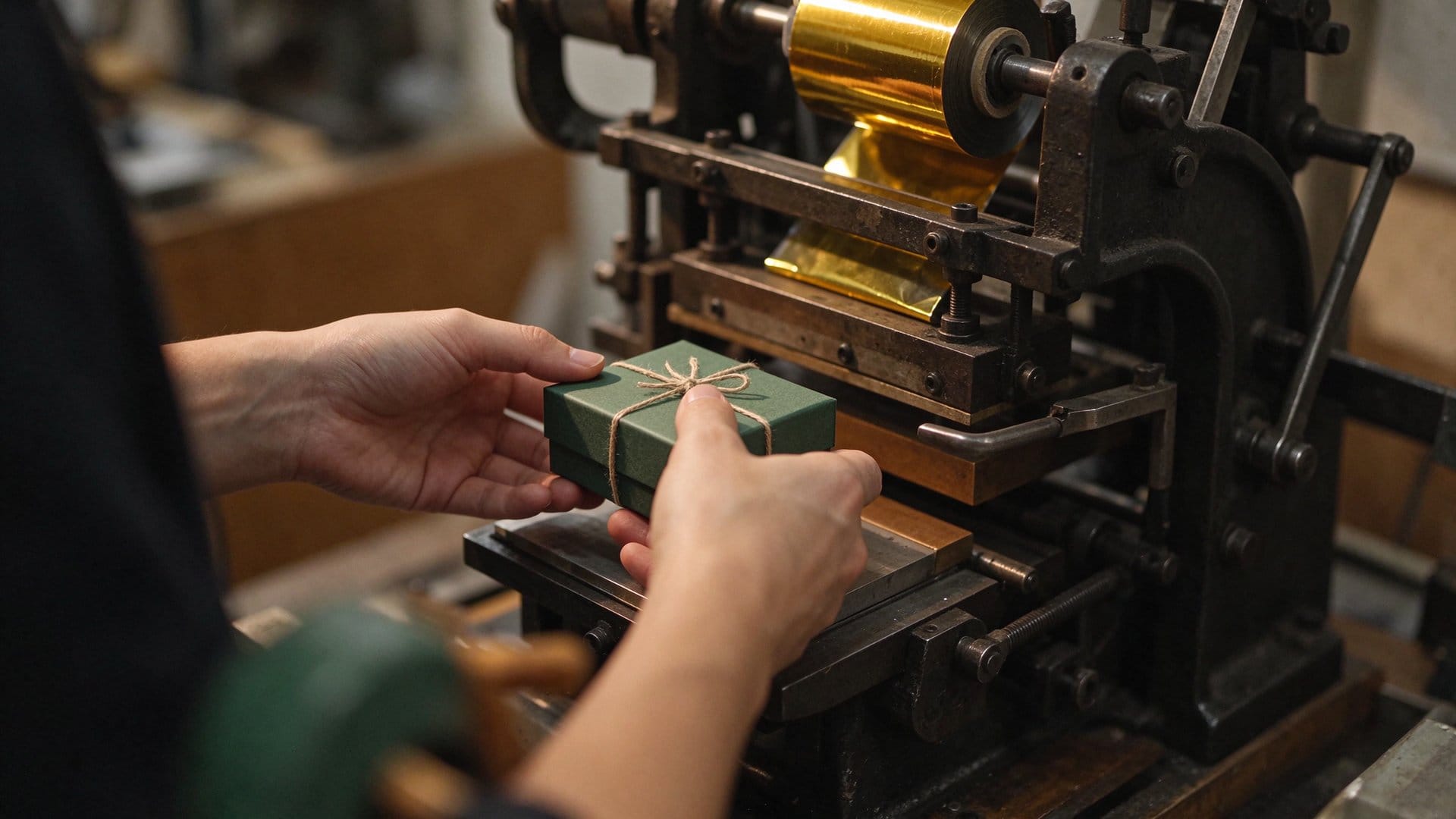
A foil die is a one-time investment — the per-box cost drops sharply at volume.
The Combination Most Luxury Brands Use
Foil stamping over embossing — often called foil embossing — is the standard luxury treatment. The die raises the form and transfers foil in one pass, so the gold sits on a raised surface and catches light from multiple angles.
It costs more than either finish alone but produces the strongest shelf presence. For a logo-led box, this is usually the single highest-impact upgrade.
Common Mistakes
Foil on artwork that’s too fine. Thin lines and small text break up in foil. Minimum feature size matters more than with print.
Embossing on gloss lamination. The texture disappears under the film. Emboss before laminating, or skip the gloss.
Choosing foil for a matte-white box. Low contrast — the shine barely registers. Foil needs a dark or saturated ground.
Forgetting the die cost in the quote. A quote that omits tooling looks cheaper and then surprises you at order confirmation. Ask for it as a separate line.
Over-pressing embossing. Too much pressure compresses the board and flattens the effect, especially on lightweight stock.
FAQ
Is foil stamping more expensive than embossing? Slightly, because foil is consumed per unit plus press time. Die costs are comparable. At volume the difference is usually cents per box.
Can foil stamping and embossing be combined? Yes — combined foil embossing is one pass with a single die and is the standard luxury treatment.
Does foil stamping work on corrugated mailer boxes? It works, but corrugated texture fights fine foil detail. Use larger, bolder shapes and expect a more matte result.
How fine can foil stamping lines be? Finer than most people assume, but small text and hairlines still break. Keep type large and strokes solid.
Which finish is more durable in shipping? Embossing survives scuffing better; foil can burnish or scratch on edges. If the box travels rough, emboss or protect the foil area.
Get a Quote
Send us your artwork and box specs — we’ll quote foil stamping, embossing, or both as separate line items so you can compare real costs. Guangdong Meiyin Digital Technology has produced custom paper packaging since 2005.