
Introduction
Online orders arrive at home with two jobs to do: keep the product safe, and make the customer feel good about the purchase. A rigid box does both better than any other packaging format. It’s why jewelry, cosmetics, and premium electronics ship in these solid, heavy boxes instead of flimsy cartons.
This guide covers what a rigid box is, how it’s made, the 8 common types, where it’s used, and why it costs more—so you know exactly what you’re paying for.
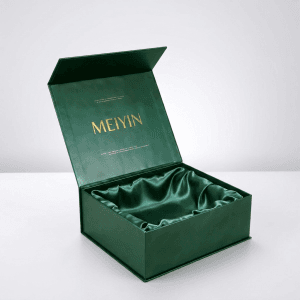 A premium rigid box with the lid open — the board thickness is visible at the edge.
What Is a Rigid Box?
A rigid box (also called a set-up box) is packaging made from thick greyboard, typically 1.5–3.0 mm thick, wrapped in printed paper or fabric and lined inside. Unlike a folding carton, it doesn’t fold flat or pop up at the point of use. It’s built as a finished, solid object and ships that way.
You choose the size, shape, and design, and the factory builds it to match your product and brand.
Table of Contents
- What Is a Rigid Box?
- Rigid Box vs Folding Carton vs Corrugated
- How Is a Rigid Box Made?
- Different Types of Rigid Boxes
- Key Benefits
- Uses and Applications
- Core Structure
- Why Are Rigid Boxes Expensive?
- How to Make Rigid Boxes More Sustainable
Rigid Box vs Folding Carton vs Corrugated
The three packaging formats most buyers compare. This table shows how they stack up on the six things that matter:
If your product needs to feel premium in hand, start with a rigid box. If it lives on a retail shelf and price matters most, a folding carton may be enough.
How Is a Rigid Box Made?
The process comes down to four steps, and it’s more manual than most people expect:
- Sizing: Greyboard is cut and shaped to the box dimensions.
- Folding/Forming: The base and lid are formed and glued from the board.
- Printing: The wrap paper is printed, laminated, and glued onto the box shape.
- Wrapping: The wrap is applied tightly by hand or machine, then the inside is lined.
 The four steps of rigid box production: sizing, folding, printing, and wrapping.
Hand wrapping is the standard for rigid boxes. It’s slower than machine assembly, but it’s the only way to get clean corners and perfectly aligned wrap. That’s part of why rigid boxes cost what they cost.
Different Types of Rigid Boxes
There are more structures than most buyers realize. These are the 8 common ones:
- Standard box. Basic one-piece rigid box, used in retail and gifting.
- Telescopic / two-piece box. A lid that covers the base partly or wholly. Flexible sizing, secure closure.
- Magnetic closure box. Lid closes with magnets instead of a latch. The premium feel buyers associate with high-end brands.
- Hinged-lid box. Lid attached at the back, opens like a book. Easy access, common for keepsakes.
- Sleeve style. An outer sleeve slides off to reveal the contents. A clean, minimal presentation.
- Collapsible rigid box. Folds flat for storage but forms a rigid structure. Good compromise on cost.
- Drawer box. A tray pulls out of a sleeve, often with a ribbon pull. Luxurious for small gifts.
- Shoulder-and-neck box. Base and lid meet without overlapping, creating a “shoulder” detail that adds visual interest.
 Four of the most ordered rigid box structures: hinge-lid (top left), two-piece (top right), magnetic (bottom left), drawer (bottom right).
Key Benefits
- Durability and protection. The thick board keeps contents secure in transit and on shelves.
- Unboxing experience. Weight, finish, and the sound of the lid closing make unboxing memorable.
- Aesthetic appeal. Full customization of shape, wrap, and finish lets the box carry your brand.
- Versatility. Eight-plus structures, any size, any finish—fit almost any product.
- Sustainability. Rigid boxes can use recycled board and FSC-certified paper.
 Why brands keep coming back: custom design builds brand value, drives demand, and stays affordable at the right quantities.
Uses and Applications
Industries That Use Rigid Boxes
- Electronics: phones, tablets, and accessories need the crush protection.
- Cosmetics: skincare, fragrance, and makeup sell better in a box that looks as good as the product.
- Snack foods: premium chocolates and confectionery arrive in rigid boxes.
- Fashion: designer accessories and shoes ship in rigid boxes that double as storage.
Products Commonly Packaged in Rigid Boxes
- Smartphones and tablets
- Perfume and skincare sets
- Fine chocolates and gifting sets
- Watches and jewelry
Core Structure
Every rigid box has the same three-part build:
- Core. Thick paperboard or chipboard gives the box its strength. This is the foundation of everything else.
- Wrapping. Decorative paper or fabric on the outside carries your brand, colors, and finishes.
- Adornments. Embossing, foil stamping, ribbons, and linings add the luxury touches that make the box stand out.
The outer printed wrap, the greyboard core, and the inner lining — the three layers every rigid box shares.
Why Are Rigid Boxes Expensive?
The honest answer is that rigid boxes cost more because they’re built differently:
- Manual assembly. Most steps—wrapping, lining, checking—are done by hand. Skilled hands cost time.
- High-quality materials. Thick greyboard, quality wrap paper, and real fabric or foam linings aren’t cheap.
- Quality checks. Every box gets inspected before packing. That’s labour the buyer doesn’t see but pays for.
In practice, a custom rigid box costs roughly 2–5 times a folding carton of the same size, and lead time runs 1–2 weeks longer.

How to Make Rigid Boxes More Sustainable
- Use recycled board. Greyboard with recycled content is standard and doesn’t weaken the box.
- Choose FSC-certified wrap. Look for FSC-certified paper if your customers ask about sourcing.
- Design to reduce waste. Right-sized boxes and simple structures cut material use without losing strength.
- Eco linings. Printed paper instead of plastic foam where protection allows.
FAQ
How thick is a rigid box? Typical greyboard is 1.5–3.0 mm. 2.0 mm suits most products; 3.0 mm or double-layer is for heavy or high-value items.
How is a rigid box made? Greyboard is cut and formed, wrapped with printed paper by hand, lined inside, and checked. See the process at our rigid box production page.
What is the MOQ for custom rigid boxes? Custom rigid boxes with standard structures usually start at 100–500 units. Our custom rigid box line starts at a 100-piece MOQ, and we reply to quote requests within 12 hours.
Rigid box or folding carton — which do I need? If the box itself needs to feel premium, use a rigid box. If it’s shelf packaging where cost wins, a folding carton. Full comparison here.
How do I measure a rigid box for my product? Measure the product, add clearance for padding and lining, and the base must be slightly smaller than the lid. Walkthrough here.
Get a Quote
Tell us your product, dimensions, quantity, and target price. We’ll recommend the structure, board thickness, wrap, and lining that match your brand without overspending. Guangdong Meiyin Digital Technology has built custom boxes since 2005 and exports to 30+ countries.