
Common Applications
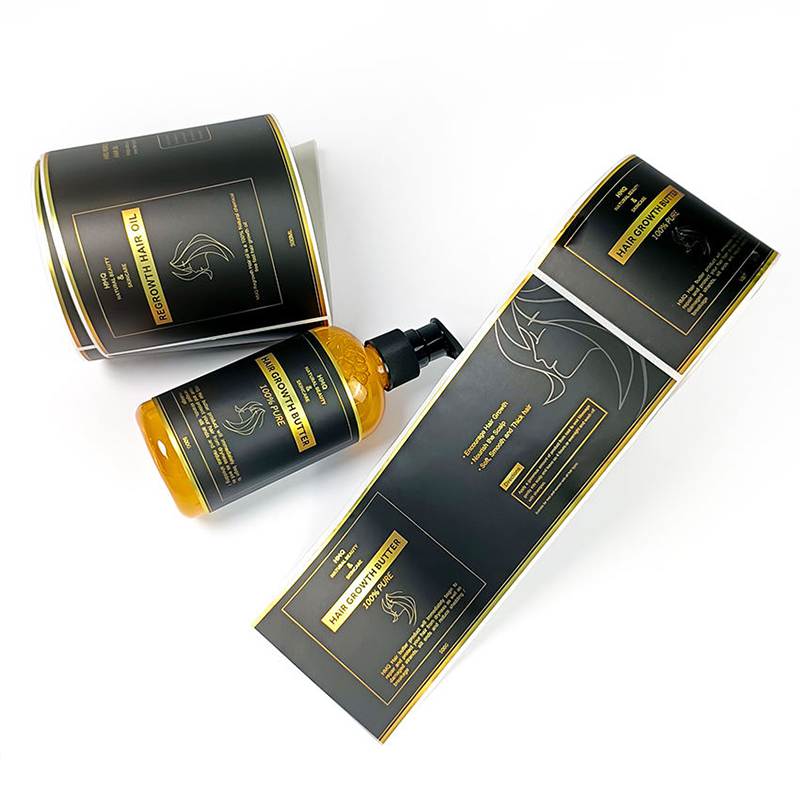
- Product packaging: A must for industries like cosmetics, chocolates, food, and beverages. Labels typically list ingredients, usage instructions, storage details, and branding.
- Shipping and mailing: Cartons and corrugated mailer boxes often require sender and recipient information, barcodes, and tracking codes.
- Inventory management & warehouses: Shelf labels, bin markers, or barcode systems make stock-keeping efficient.
- Office and home organization: From file folders to kitchen storage, labels keep things neat and easy to find.
Materials & Formats
Labels also vary in form and production method:
- Sheet labels: Supplied on sheets and perfect for small print runs or DIY projects. They’re easy to use and can be printed with a standard office printer.
- Roll labels: Delivered on rolls, these are ideal for large-scale, repetitive labeling tasks. They are compatible with automatic label dispensers and machines—especially useful for e‑commerce brands using packaging boxes in higher volumes.
Key Traits of Labels
- Lightweight: Easy to apply and ship without adding bulk.
- Functional: The main role is to communicate clearly and professionally.
- Customizable: With providers like Meiyin, businesses can tailor labels by size, finish, adhesive strength, and printing style to match their exact requirements.
 In short: Labels are the workhorses of packaging—practical, essential, and always focused on delivering the right information to the right audience.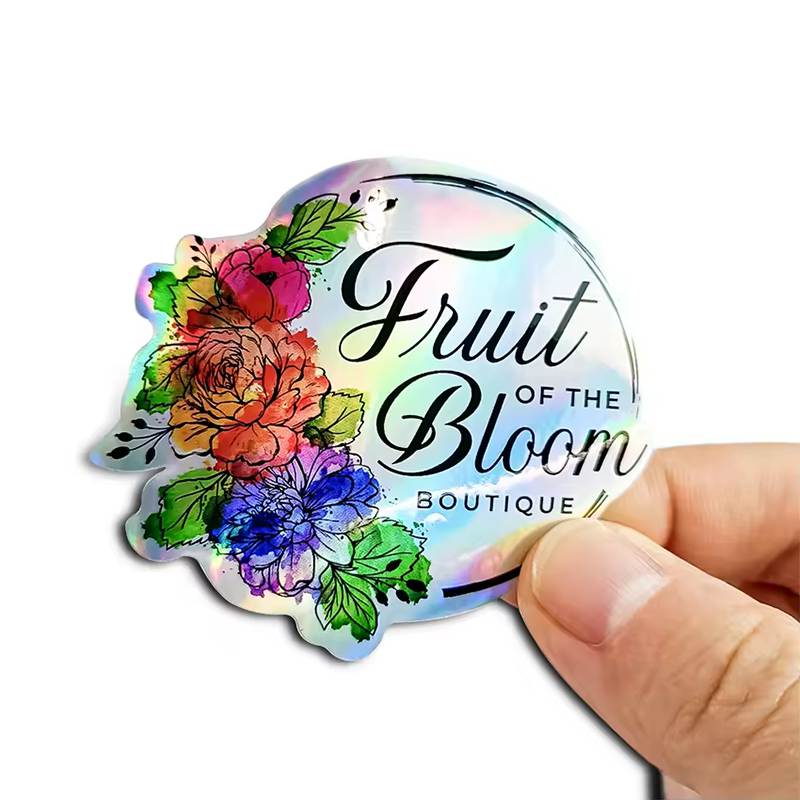
Common Applications
- Brand promotions and events: Many businesses include stickers in custom packaging boxes or use them at events to strengthen their marketing presence.
- Artists and influencers: Independent creators use custom stickers to sell their designs, showcasing personal style on merchandise like laptops, skateboards, or water bottles.
- Decorative use: Stickers easily personalize items such as bottles, notebooks, cars, or even electronics, often alongside products like custom thank you cards inside e‑commerce parcels.
Formats
- Die‑cut stickers: These are precisely cut to match the shape of the artwork or logo, creating a bold and distinctive look. Perfect for promotional giveaways or merchandise.
- Kiss‑cut stickers: Cut only through the top vinyl layer while leaving the backing sheet intact. This format protects the design during handling and makes peeling easier—often used when designs include extra branding elements, such as a company logo plus website link.
Key Traits of Stickers
- Durable: Often produced from vinyl or other long‑lasting materials to resist scratches, moisture, and sunlight.
- Creative: Stickers provide endless design possibilities, from simple logos to complex illustrations.
- Visually Impactful: With bright colors and bold shapes, stickers are made to grab attention and leave a lasting impression.
Simply put, stickers are a tool for expression and engagement. They don’t just decorate; they create an emotional connection between the brand—or the individual—and the audience.Although labels and stickers serve different purposes, they share many features that often make people confuse the two.
Adhesive Backing
Both are designed to stick onto surfaces. Depending on the use case, brands may choose permanent adhesives for long‑lasting applications or removable adhesives when flexibility is needed.
Durable Materials
Labels and stickers are commonly made from paper, film, or vinyl, ensuring they can withstand handling, shipping, or even exposure to moisture. Some businesses enhance durability with rigid packaging such as drawer boxes or magnetic gift boxes, combining both adhesive branding and protective storage.
Customization Options
Both products can be fully customized to align with a brand’s identity:
- Size & shape: From standard rectangles to fully custom die‑cuts.
- Finishes: Matte, glossy, embossed, or foiled.
- Design elements: Logos, QR codes, product details, or decorative patterns.
With partners like Meiyin Packaging, businesses can order custom stickers and labels tailored to match their products, packaging, and marketing strategy.
High‑Quality Printing
Labels and stickers are produced using advanced printing technology, delivering vivid colors, sharp text, and consistent quality. Techniques that are also applied to other print marketing tools like custom brochures and booklets ensure your brand looks professional across all touchpoints.
In short, while the goals of labels and stickers may differ, the foundations—adhesive backing, durable materials, customization, and high‑quality printing—make them equally valuable in packaging and marketing.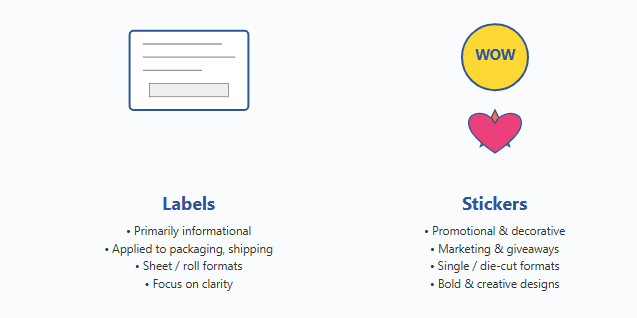
Purpose
- Labels: Primarily informational, designed to provide details such as ingredients, safety instructions, or barcodes. For example, cosmetic boxes often require labels for compliance and consumer information.
- Stickers: More promotional and expressive, meant to grab attention, showcase brand personality, or serve as decorative elements.
Applications
- Labels: Widely applied in product packaging, shipping, and inventory management. For instance, custom chocolate boxes are often paired with labels to show flavor or expiration information.
- Stickers: Common in marketing campaigns, giveaways, or for personalization. They are frequently included in custom packaging boxes to delight customers and build brand loyalty.
Durability
Stickers are typically crafted with stronger, weather‑resistant materials, making them suitable for outdoor use (e.g., car stickers, skateboard decals). Labels are usually thinner and optimized for indoor packaging and organizational purposes.
Formats
- Labels: Most commonly come in sheets (for small projects) or rolls (for high-volume applications with dispensers or machines).
- Stickers: Produced more often as single pieces, available in die-cut or kiss-cut formats for creative designs.
Design Focus
- Labels: Prioritize clarity and readability—ensuring product and brand information is presented professionally.
- Stickers: Emphasize creativity and bold visuals, such as custom artwork, promotional slogans, or decorative graphics.
Put simply, labels communicate information, while stickers communicate personality. Together, they play complementary roles in packaging, branding, and customer experience.Selecting between labels and stickers ultimately comes down to your goal—do you need to inform or to express?
When to Use Labels
- Regulatory information: Essential for industries like food, cosmetics, and beverages. For example, cosmetic packaging boxes often require labels to display ingredients, usage instructions, and safety compliance.
- Shipping details: On cartons or corrugated mailer boxes, labels carry addresses, barcodes, and tracking codes.
- Product packaging: Everyday retail products such as chocolates, wine, or apparel benefit from professional labels that organize information clearly and build trust.
When to Use Stickers
- Promotions: Perfect for limited‑time deals or seasonal campaigns—adding a bold sticker to a paper tube box can immediately grab attention.
- Giveaways: Stickers are low‑cost yet highly engaging. Many businesses include them inside magnetic gift boxes or eCommerce parcels to delight customers.
- Personalization: Stickers help make generic packaging unique. A custom die‑cut design on two‑piece boxes or drawer boxes can instantly elevate the unboxing experience.
Practical Examples
- A bakery selling handmade chocolates might use labels for regulatory ingredient listings on retail boxes while adding stickers to promote festive holiday editions.
- An eCommerce fashion brand shipping orders in apparel boxes can use labels for SKU management, and insert branded stickers as freebies to encourage social sharing.
- A luxury cosmetic company may rely on labels for compliance and clarity, but use stylish stickers during product launches to spark excitement.
In short: use labels when accuracy and compliance are critical, and use stickers when visibility, marketing, or personalization is the goal.In today’s retail and eCommerce landscape, sustainability is no longer optional—it’s a customer expectation. Choosing the right type of sticker or label not only affects design and functionality but also impacts your environmental footprint.
Right Sizing Reduces Waste
Oversized labels or stickers may look bold, but they often mean more raw material consumption. By aligning the size of your adhesive products with the actual packaging—like tuck boxes or display stands—you minimize paper and film waste while keeping costs under control.
Eco‑Friendly Materials
More businesses are switching to:
- Recycled papers for basic labels.
- Kraft paper and biodegradable adhesives for a natural, eco‑conscious look.
- Durable yet recyclable formats that match sustainable outer packaging, such as paper bags or paper tube boxes.
Sustainability as Brand Value
Using eco‑friendly labels and stickers is more than a cost-saving decision—it’s a marketing asset. Shoppers are actively attracted to brands that show responsibility and transparency. In fact, according to sustainable packaging research on Wikipedia, eco‑design choices are a top driver of consumer trust.
From recycled paper stock to biodegradable glue, sustainable choices in labels and stickers can significantly strengthen a brand’s environmental credentials while reducing waste.Labels and stickers may look alike, but their roles are very different:
- Labels = functional and informational, ideal for product packaging, shipping details, and compliance.
- Stickers = expressive and promotional, perfect for visibility, giveaways, and personalization.
Both are valuable tools depending on your goals. Labels build trust with clarity and professionalism, while stickers create excitement and engagement through creativity. The smartest brands often combine the two for maximum impact.
 Ready to upgrade your packaging strategy?
- Explore our full product catalog for a variety of customizable packaging solutions.
- Or contact us today to request a tailored quote that matches your brand’s unique style.
With the right balance of labels and stickers, you can ensure your packaging is not just practical—but also unforgettable.

Hi, I'm WiWi Deng, hope you like this blog post
With more than 10 years of experience in OEM/ODM/Private Label Paper Packaging, I'd love to share with you the valuable knowledge related to paper box products from a reliable Chinese supplier's perspective.